
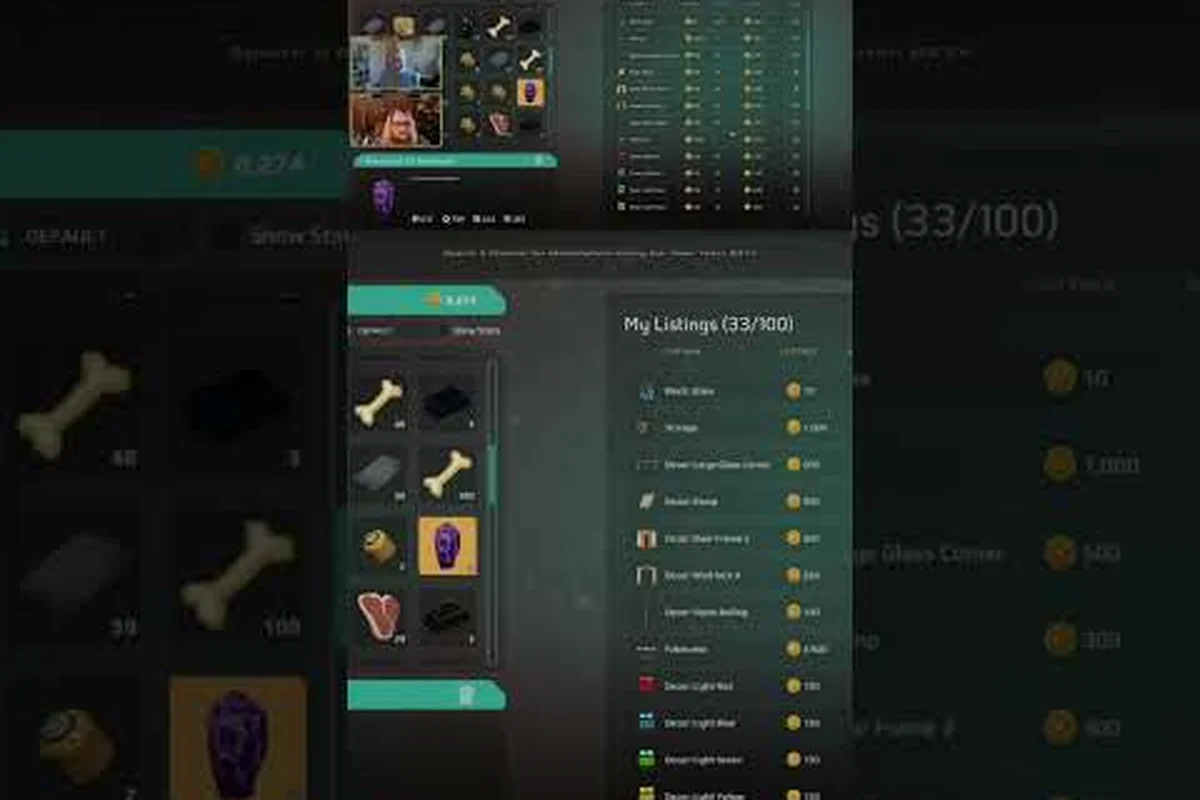
The Stars Reach auction house sits at the center of a player-driven galactic economy where every profession feeds another. Whether you are a miner hauling raw ore or a weaponsmith crafting endgame gear, the marketplace determines what your labor is worth across dozens of connected worlds. Understanding how this system works is the difference between scraping by and building serious wealth.
The official Stars Reach economy overview describes a loop where every playstyle outputs goods or services other people need. Warriors require the weapons that weaponsmiths craft, weaponsmiths depend on the resources miners extract, and miners need logistics to move heavy loads between planets. The auction house is where all these threads connect, making it the single most important tool for anyone serious about the stars reach galactic economy.
How the Stars Reach Auction House Works
The auction house operates as a cross-world marketplace that links every settled planet in the galaxy. Unlike traditional MMO auction systems that lock you to a single server, Stars Reach uses a shardless architecture where the entire player base shares one continuous universe. This design choice, detailed in the announcement from Playable Worlds, means your listings are visible to every active player regardless of which planet they currently call home.
When you open the auction interface, you will see listings organized by category, rarity, and price. The system supports both instant purchase and timed auctions, giving sellers flexibility in how they move inventory. For buyers, the search filters let you narrow results by item type, quality tier, and seller reputation, which is crucial when dealing with player-crafted goods that vary in stats.
Listing Basics and Fees
Every listing costs a small deposit that scales with the item's value and the auction duration you select. The deposit is refunded when the item sells, but forfeited if you cancel the listing early. This mechanic discourages market flooding and keeps the stars reach marketplace from being buried under junk listings.
| Listing Duration | Deposit Cost | Refund Condition | Best Use Case |
|---|---|---|---|
| 1 Hour | 2% of listing price | Refunded on sale | Quick flips and price testing |
| 12 Hours | 4% of listing price | Refunded on sale | Standard daily trading |
| 48 Hours | 6% of listing price | Refunded on sale | High-value rare items |
| 7 Days | 10% of listing price | Refunded on sale | Bulk commodity shipments |
The auction house commission is a flat 5% taken from the final sale price, which is lower than what you would pay selling to NPC vendors. That margin matters when you are moving high-volume goods because it directly impacts your profit per unit. Community reports suggest that players who consistently use the auction house rather than vendor trash see their effective income rise by 30-40% over a typical play session.
Cross-World Shipping and Logistics
One of the most overlooked features is the logistics network that physically moves purchased goods between planets. When you buy an item listed on a distant world, it does not magically appear in your inventory. Instead, a shipping order is created, and the goods travel via cargo routes that take real time to complete.
| Shipping Distance | Delivery Time | Express Fee | Standard Fee |
|---|---|---|---|
| Same Planet | Instant | N/A | N/A |
| Adjacent System | 15 minutes | 25% surcharge | Free |
| Mid-Range Systems | 45 minutes | 20% surcharge | Free |
| Far-Flung Colonies | 2 hours | 15% surcharge | Free |
This shipping mechanic creates natural arbitrage opportunities because prices vary by region. A resource that is abundant on one planet might be scarce on another, and the delivery time gives you a window to predict price movements. Savvy traders monitor the stars reach auction house across multiple systems, buying low in surplus regions and listing high in deficit areas before the market corrects itself.
The Galactic Economy and Trade Professions
The stars reach galactic economy is not a single market but a web of interdependent professions, each producing goods that others consume. The official game description emphasizes that peaceful play matters just as much as combat, and the economy is the primary endgame for many players. Understanding how your chosen profession feeds into the broader trade network is essential for maximizing your earnings.
Mining and Raw Materials
Miners are the foundation of the economy because every crafted item starts with raw resources. Ore, crystals, and rare minerals are extracted from planetary surfaces and sell in bulk on the auction house. The key to mining profit is identifying which materials are in highest demand based on current crafting trends.
-
Common ores sell in high volume at thin margins, making them reliable but not exciting income
-
Rare crystals command premium prices but require deeper excavation and better tools
-
Radioactive isotopes are needed for high-tier ship components and consistently hold value
-
Organic compounds from alien flora feed the chef and botanist professions
The best miners track the auction house prices for refined materials versus raw ore. Sometimes selling unrefined ore is more profitable because you avoid the time cost of processing, while other times the refined version sells for double the raw price. Checking the stars reach marketplace before deciding how to process your haul is a habit that separates profitable miners from broke ones.
Crafting Professions and the Auction House
Crafters are the middlemen of the stars reach galactic economy, converting raw materials into finished goods that command higher prices. Weaponsmiths, armorers, and shipwrights all rely on the auction house both to source materials and to sell their finished products. The key insight is that crafting profit comes from the gap between material costs and finished goods prices, not from the crafting itself.
| Profession | Primary Inputs | Typical Output | Average Profit Margin |
|---|---|---|---|
| Weaponsmith | Refined ore, rare crystals | Melee and ranged weapons | 25-40% |
| Armorer | Metal plates, leather | Armor sets and shields | 20-35% |
| Shipwright | Alloy composites, electronics | Ship components and hulls | 30-50% |
| Chef | Organic compounds, botanist goods | Buff foods and consumables | 15-25% |
The trade professions in Stars Reach are classless, meaning any character can learn any skill tree. This flexibility lets you pivot between gathering and crafting based on market conditions. If weapon prices crash because too many weaponsmiths are flooding the market, you can switch to cooking buff foods that always have steady demand from raiders and explorers.
Service Professions and the Marketplace
Not every profession produces physical goods. Medics, logistics specialists, and settlement builders offer services that are also traded through the marketplace. While services are typically arranged through direct contracts, the auction house still plays a role in pricing the consumables these professions need.
The medic guide covers how medics consume medical supplies that are crafted and sold on the auction house. Similarly, builders need construction materials that miners and crafters provide. Every service profession has a supply chain that runs through the marketplace, which means even non-crafters participate in the stars reach economy for beginners by purchasing what they need rather than gathering everything themselves.
Stars Reach Economy for Beginners
Starting fresh in the stars reach economy can feel overwhelming because the auction house presents thousands of listings across dozens of categories. The key is to focus on a single niche and learn its price patterns before expanding. Beginners who try to trade everything at once typically spread themselves too thin and miss the opportunities that come from deep market knowledge.
First Steps in the Marketplace
Your first goal should be earning enough capital to fund your chosen profession. The most reliable starter strategy is gathering and selling raw materials because they require no upfront investment beyond basic tools. Even a new player with a starter pickaxe can mine common ore and list it on the auction house for immediate income.
-
Start with common ores that sell in high volume, accepting thin margins for reliable income
-
Check prices daily because supply fluctuates with player activity and server events
-
List in small batches to avoid flooding the market and driving prices down
-
Track your sales to learn which items move fast and which sit unsold
-
Upgrade storage early so you can stockpile materials when prices are low
The buy low, sell high principle applies to the stars reach marketplace just as it does to real-world trading. Watch for price dips caused by oversupply, buy the excess, and hold it until demand pushes prices back up. This strategy requires patience and storage space, but it is the most reliable way to build wealth without crafting.
Avoiding Common Beginner Mistakes
New traders often make the mistake of undercutting the market aggressively, thinking that lower prices mean faster sales. While this works for moving inventory quickly, it also trains buyers to wait for your low prices, which erodes your long-term profit. A better approach is to price slightly below the median and let the natural flow of demand move your goods.
Another common error is ignoring the shipping costs when calculating profit. An item that sells for 100 credits but costs 25 credits to ship across the galaxy only nets you 75 credits, which might be worse than selling locally for 80 credits. Always factor delivery fees into your pricing decisions, especially when listing on distant worlds.
Advanced Trading Strategies for the Auction House
Once you understand the basics of the stars reach auction house, you can move into advanced strategies that generate consistent profit. These approaches require more market awareness and capital, but they reward players who pay attention to economic patterns.
Market Manipulation and Price Trends
The stars reach galactic economy is player-driven, which means prices are influenced by real supply and demand. Large groups of players can influence prices by controlling the supply of key resources. If a major guild decides to stockpile a rare mineral, the reduced supply drives prices up, creating profit opportunities for anyone holding that mineral in reserve.
Price tracking tools are essential for serious traders. Keep a spreadsheet of historical prices for your key commodities, noting the day of the week and any major game events that might have influenced demand. Over time, you will spot patterns that let you predict when prices will rise or fall, allowing you to buy and sell at optimal moments.
Cross-Planet Arbitrage
Because shipping takes time, prices for the same item can differ significantly between planets. A resource that is common on a mining world might be scarce on a heavily populated capital planet, creating an arbitrage opportunity. The trick is calculating whether the price difference exceeds your shipping costs and the time investment required.
| Route Example | Buy Price | Sell Price | Shipping Cost | Net Profit |
|---|---|---|---|---|
| Mining Colony to Capital | 50 cr | 95 cr | 15 cr | 30 cr |
| Agricultural World to Industrial | 40 cr | 75 cr | 12 cr | 23 cr |
| Frontier Outpost to Core Systems | 60 cr | 120 cr | 25 cr | 35 cr |
The arbitrage profit depends on your ability to move goods efficiently. Players who invest in larger cargo ships can move more volume per trip, which multiplies their per-unit profit. The trading guide covers ship upgrades and route planning in detail, which is essential reading for anyone serious about cross-world trade.
The Role of Player Settlements
Player-built settlements are both sources of supply and centers of demand in the stars reach economy. Settlements that specialize in mining produce raw materials that feed the auction house, while industrial settlements consume those materials to craft finished goods. Understanding which settlements produce what gives you an edge in predicting market trends.
The planet ownership guide explains how settlements develop and what infrastructure they need. Settlements with advanced refineries can process raw ore into higher-value materials, shifting the supply curve for refined goods. Watching settlement development on your server can tip you off to upcoming supply changes before they hit the auction house.
The Stars Reach Marketplace and Community Trading
Beyond the auction house, the stars reach marketplace includes direct player-to-player trading, settlement shops, and trade routes that operate outside the automated system. While the auction house is the most convenient way to buy and sell, direct trading often yields better prices because you skip the commission and shipping fees.
Settlement Shops and Direct Sales
Many settlements operate their own shops where players can browse goods in person. These shops often offer better prices than the auction house because sellers avoid the 5% commission. The tradeoff is that you must physically travel to the settlement, which takes time and fuel. For bulk purchases, the trip is often worth it.
-
Settlement shops offer local prices that reflect the settlement's production focus
-
Direct trade lets you negotiate prices with individual players
-
Bulk discounts are common when buying directly from producers
-
Quality inspection is possible before purchase, unlike auction listings
The goods and services guide covers the full range of trading options available beyond the auction house, including how to set up your own shop and attract customers. Players who master both systems have a significant advantage because they can choose the most profitable channel for each transaction.
Trade Routes and the Logistics Network
Established trade routes connect major settlements and create predictable patterns of supply and demand. Merchants who run these routes regularly learn which goods move well in each direction and can optimize their cargo loads accordingly. The logistics network that ships auction purchases also moves goods between settlements, creating additional trading opportunities.
The stars reach economy for beginners often feels like a closed loop where you need money to make money. Breaking into profitable trading requires either starting capital or a willingness to grind gathering professions until you build a nest egg. Once you have that foundation, the auction house becomes a powerful tool for multiplying your wealth through smart trading.
Frequently Asked Questions
What is the best way to start using the Stars Reach auction house?
Begin by mining common ores and listing them at slightly below market price to learn the system. Track your sales to understand which items move quickly, then gradually expand into crafting or arbitrage trading. Focus on one niche until you understand its price patterns before diversifying.
How do shipping costs affect auction house profits?
Shipping costs are deducted from your sale price, so an item that sells for 100 credits might only net you 75 credits after delivery fees. Always factor shipping into your pricing, especially for cross-planet listings. Local sales often yield better margins despite lower prices because you avoid delivery charges.
Can I make a living purely from trading on the auction house?
Yes, but it requires capital and market knowledge. Successful traders maintain a spreadsheet of price trends, watch settlement development for supply changes, and run arbitrage routes between planets. The stars reach galactic economy rewards players who understand supply and demand dynamics across the connected worlds.
Are there fees for listing items on the auction house?
Yes, every listing requires a deposit that scales with the item's value and auction duration. The deposit is refunded when the item sells but forfeited if you cancel early. Additionally, a 5% commission is taken from the final sale price. These fees are lower than selling to NPC vendors, making the auction house the preferred sales channel.
How does the auction house connect to crafting professions?
Crafters use the auction house to source raw materials and sell finished goods. The profit margin for crafted items depends on the gap between material costs and finished product prices. Monitoring the stars reach marketplace for material prices helps crafters time their purchases and maximize their crafting profit.