
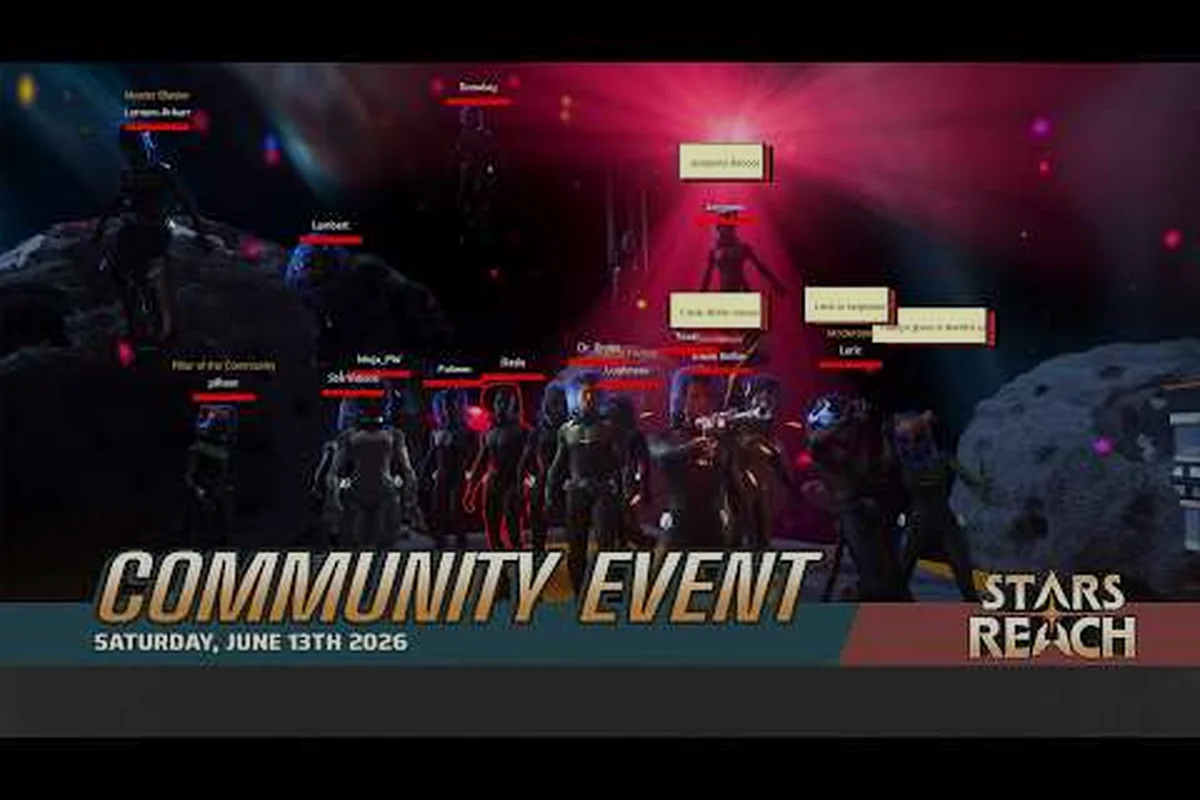
Jumping into a shared galaxy with thousands of other players can feel overwhelming, but a solid Stars Reach group play guide changes everything. This isn't a small-scale survival title; it's a massive multiplayer sandbox where your choices ripple across entire planets. Understanding how to coordinate with others, avoid common Stars Reach beginner mistakes, and structure your time around Stars Reach short sessions will determine whether you thrive or burn out. The good news is that most pitfalls are entirely preventable with the right roadmap.
Why Group Play Defines Your Stars Reach Experience
Stars Reach is fundamentally built around collaboration, and the official description from the Stars Reach website confirms that thousands of players share a single galaxy with thousands of planets. Every settlement, every terraformed landscape, and every economic boom starts with a group of players deciding to work together. Solo play is possible, but the game's design pushes you toward communities because the problems you face—hostile wildlife, resource scarcity, and planetary management—are group problems at their core.
The official site describes the experience as "player cities of Star Wars Galaxies writ large," which gives you a sense of scale. You aren't just building a base; you're contributing to a living world that other players will inhabit long after you log off. This means your Stars Reach beginner roadmap should prioritize finding a community early, because the connections you build in the first week will shape your entire playthrough.
Group Play Guide: Finding Your First Crew
Your first task in any Stars Reach group play guide is locating a crew that matches your playstyle. The game's official Discord server is the most active hub for recruitment, but you can also find groups through the in-game chat channels and community forums. Look for settlements that advertise their focus—some groups specialize in industrial production, while others lean toward exploration or combat.
When evaluating a group, consider their activity windows. If you only play during specific hours, a group that's active during your off-time won't help you progress. The best approach is to join a settlement with a shared timezone and a structured onboarding process for new members. Many established groups run orientation sessions that walk you through their resource chains and building priorities, which saves you hours of trial and error.
The Social Contract of Shared Worlds
Every planet in Stars Reach has its own economic conditions and player-driven rules, according to community reports. Some worlds are heavily industrialized, while others remain pristine wilderness. Before you start building, observe the local culture. Are players cooperative or competitive? Is there a governance system in place? These factors determine how you should behave and what you can expect from your neighbors.
The settlement charter is your most important document. Most established groups have written rules about resource sharing, building zones, and conflict resolution. Read it carefully and ask questions before committing. This is one of the most common Stars Reach mistakes to avoid—joining a group without understanding its social contract often leads to frustration and wasted effort.
Structuring Stars Reach Short Sessions Effectively
Not everyone can dedicate entire weekends to gaming, and the game respects that reality. Stars Reach short sessions are completely viable if you plan them properly. The key is understanding that progress comes from consistent, focused effort rather than marathon play sessions. A well-executed 45-minute session can accomplish more than a scattered four-hour grind.
| Session Type | Duration | Best Activities | Expected Output |
|---|---|---|---|
| Quick Check-In | 15-20 min | Harvest crops, check production queues, chat with group | Passive resource income maintained |
| Focused Task | 30-45 min | Complete one quest chain, gather specific materials | One meaningful progression step |
| Group Activity | 60-90 min | Settlement building, exploration runs, boss fights | Significant shared progress |
| Deep Dive | 2+ hours | Planet colonization, major construction projects | Major milestone completion |
The table above shows how to categorize your available time. The quick check-in session is crucial because it keeps your passive systems running. If you let your production queues stall, you lose valuable time that compounds over days. Set a daily routine where you log in, manage your settlement's output, and log out—this alone will put you ahead of players who only play sporadically.
Setting Realistic Goals for Each Session
Before you log in, decide what you want to accomplish. This sounds simple, but many players waste their first 15 minutes wandering around without direction. A proper Stars Reach beginner roadmap includes a session planning habit where you write down one or two concrete objectives before starting the game. This could be "gather 200 iron ore" or "complete the first terraforming quest."
Your goals should match your available time. If you only have 30 minutes, don't start a project that requires two hours of uninterrupted focus. Instead, break larger projects into smaller milestones that fit your schedule. This approach prevents the frustration of leaving tasks half-finished and makes every session feel productive, which is essential for maintaining motivation over the long term.
Leveraging Group Resources for Efficiency
One of the biggest advantages of group play is resource sharing. In Stars Reach, players can pool materials, tools, and labor to accomplish tasks that would take solo players days. A group of five players can terraform a small area in one session, while a solo player might need a week. This efficiency gain is why the Stars Reach group play guide emphasizes community building so heavily.
Establish a shared resource depot early in your settlement's development. This central storage area lets members deposit excess materials and withdraw what they need for their projects. Many groups also maintain a production schedule that assigns specific tasks to different members based on their skills and availability. This division of labor ensures that nothing falls through the cracks and that every member contributes meaningfully.
Common Stars Reach Beginner Mistakes That Derail Progress
Every player makes mistakes when starting a new game, but some errors are more costly than others. Understanding the most common Stars Reach beginner mistakes will save you hours of frustration and prevent you from developing bad habits that are hard to break later. The community has identified several recurring issues that new players encounter, and knowing about them in advance gives you a significant advantage.
| Mistake | Why It Happens | Impact | Prevention |
|---|---|---|---|
| Building too far from group | Desire for privacy | Isolation from shared resources | Scout locations with your group first |
| Ignoring production chains | Focus on combat/exploration | Resource shortages later | Learn basic crafting early |
| Hoarding materials | Fear of scarcity | Slows group progress | Contribute to shared depot |
| Overextending territory | Ambition without resources | Defensive vulnerabilities | Expand incrementally |
| Skipping tutorials | Overconfidence | Missing core mechanics | Complete all tutorial quests |
The table above highlights the five most damaging mistakes reported by experienced players. The overextension trap is particularly dangerous because it feels like progress while actually creating long-term problems. When you claim territory you can't defend or maintain, you create vulnerabilities that hostile players or wildlife can exploit. Start small, secure your position, and expand only when you have the resources to support new areas.
The Isolation Error: Why Going Solo Hurts
Many new players make the mistake of treating Stars Reach like a single-player game. They find a quiet corner of a planet, build a small base, and try to progress independently. While this works temporarily, it creates a ceiling on your potential. The game's economy, security, and content are all designed around group participation, so isolating yourself means missing out on most of what Stars Reach offers.
The resource multiplier effect is the most compelling reason to stay connected. When five players each gather materials for an hour, they collectively produce more than five times what a solo player could gather alone, because they can specialize and share tools. This efficiency gap only widens as you progress, making group play increasingly important for high-level content.
Misunderstanding the Progression System
Stars Reach uses a horizontal progression system rather than traditional vertical leveling. This means you're not constantly chasing higher numbers; instead, you're unlocking new capabilities and options. Many beginners mistake this for a lack of progression and abandon the game prematurely. Understanding this design philosophy is essential for any Stars Reach beginner roadmap.
The game rewards skill diversification and knowledge accumulation rather than raw power. A player who understands planetary ecology, resource distribution, and group dynamics will outperform a player with better equipment but no strategic awareness. This is why reading guides and learning from experienced players is so valuable—the knowledge you gain compounds over time.
Building Your Stars Reach Beginner Roadmap
A proper Stars Reach beginner roadmap should cover your first 30 days of play, with clear milestones and checkpoints. This structured approach prevents aimless wandering and ensures you build a solid foundation for long-term success. The roadmap below is based on community testing and player reports, so adjust it based on your specific circumstances and goals.
| Week | Primary Focus | Key Milestones | Group Activities |
|---|---|---|---|
| Week 1 | Learning basics | Complete tutorials, join a settlement | Attend orientation, meet group members |
| Week 2 | Resource foundation | Establish production chains, build personal quarters | Contribute to shared depot, join resource runs |
| Week 3 | Skill development | Unlock advanced crafting, learn terraforming basics | Participate in group building projects |
| Week 4 | Expansion | Claim additional territory, develop specialization | Lead a small group activity, mentor new players |
This roadmap emphasizes community integration from day one. The first week is about learning and connecting, not maximizing efficiency. By week two, you should be contributing meaningfully to your group's resource pool. Week three focuses on developing your unique skills, and week four positions you as a valuable group member who can take on leadership roles.
Week One: Foundations and Connections
Your first week in Stars Reach should be dedicated to understanding the game's core systems and building relationships. Complete all tutorial quests, even if they seem basic—they teach you mechanics that will become second nature later. Explore your starting planet to understand its resources, wildlife, and terrain features. This knowledge will inform your building decisions for weeks to come.
Join a settlement during your first few days, even if you're not ready to contribute significantly. The earlier you integrate into a community, the faster you'll learn the unwritten rules and social dynamics. Most groups are welcoming to new players who show genuine interest, so don't be afraid to ask questions and seek guidance. The Stars Reach beginner guide covers these early steps in more detail.
Week Two: Building Your Resource Base
Once you understand the basics, shift your focus to establishing reliable resource production. This means setting up mining operations, farming plots, and crafting stations that generate materials consistently. The goal is to create a passive income stream that supports your activities without requiring constant attention.
Coordinate with your group to avoid duplicating efforts. If three members are all mining iron, you're wasting labor that could be distributed across different resources. Use your group's communication channels to track who's producing what and identify gaps in your collective resource chain. This coordination is one of the most valuable habits you can develop early.
Week Three: Developing Your Specialization
By week three, you should have a sense of what you enjoy most in Stars Reach. Some players love exploration, discovering new planets and mapping their resources. Others prefer crafting, turning raw materials into valuable goods. Still others thrive on combat, defending settlements from threats. Identify your preferred playstyle and focus your development there.
Your specialization makes you valuable to your group in ways that generic play cannot. A group with a dedicated explorer, a master crafter, and a skilled defender is far more effective than a group of generalists. This is why the Stars Reach group play guide emphasizes finding your niche—it benefits both you and your community.
Week Four: Expanding Your Influence
The final week of your initial roadmap is about expansion and leadership. By now, you should have the skills and resources to claim additional territory or take on more responsibility within your group. This could mean leading a resource run, organizing a building project, or mentoring newer players who joined after you.
Expansion should be strategic and incremental. Don't claim territory just because it's available; make sure you can defend and maintain it. A well-planned expansion that adds value to your settlement is better than a sprawling territory that drains your resources. This measured approach prevents many of the Stars Reach mistakes to avoid that plague overambitious players.
Advanced Group Strategies for Long-Term Success
Once you've mastered the basics, you can start implementing advanced strategies that set your group apart. These tactics require coordination and trust, but they dramatically increase your collective efficiency and enjoyment of the game. The most successful settlements in Stars Reach use these approaches consistently.
| Strategy | Implementation | Time Investment | Group Benefit |
|---|---|---|---|
| Role specialization | Assign permanent roles | Low | Consistent production |
| Scheduled group events | Weekly calendar | Medium | Predictable progress |
| Shared infrastructure | Centralized facilities | High | Reduced duplication |
| Knowledge sharing | Documentation and mentoring | Medium | Faster onboarding |
| Diplomatic relations | Alliance building | Low | Security and trade |
The knowledge sharing strategy is perhaps the most underrated. Groups that maintain documentation—whether it's a shared document, a Discord channel, or an in-game library—accelerate their members' learning significantly. When a new player joins, they can read about the group's history, current projects, and standard procedures without needing to ask dozens of questions.
Coordinating Large-Scale Projects
Major projects like terraforming a new region or constructing a planetary hub require careful coordination. These efforts involve multiple players working simultaneously, often on different aspects of the same goal. Successful groups use a project management approach with clear roles, deadlines, and communication protocols.
The lead builder coordinates construction, the resource manager ensures materials flow, and the security team protects the work site. Each role is essential, and clear communication prevents conflicts and wasted effort. According to community reports, projects that fail usually do so because of poor coordination rather than insufficient resources.
Handling Conflict Within Your Group
No group is immune to conflict, and how you handle disagreements determines whether your settlement thrives or fractures. The best approach is proactive communication—address issues early before they escalate. Most groups have a leadership structure that handles disputes, but every member should understand the conflict resolution process.
When conflicts arise, focus on the issue rather than personalities. Frame discussions around what's best for the group's goals rather than who's right or wrong. This professional approach might feel formal for a game, but it prevents the petty drama that destroys many settlements. The Stars Reach horizontal progression guide offers additional insights into how player relationships affect long-term success.
Frequently Asked Questions
What is the best way to find a group in Stars Reach?
The official Discord server is the most reliable place to find active settlements recruiting new members. Look for groups that match your playstyle and schedule, then attend their orientation sessions before committing. Established groups with structured onboarding processes are generally better for beginners than newly formed settlements.
How long should my first play session be?
Your first session should be 60-90 minutes to complete the tutorial content and get oriented. After that, Stars Reach short sessions of 30-45 minutes are perfectly viable for daily play. The key is consistency—regular short sessions beat occasional marathon sessions for building momentum and maintaining group relationships.
What are the most common Stars Reach beginner mistakes?
The most damaging mistakes include building in isolation, ignoring production chains, hoarding materials, overextending territory, and skipping tutorial content. Each of these creates long-term problems that compound over time. Understanding these Stars Reach mistakes to avoid before you start will save you significant frustration.
Can I play Stars Reach solo effectively?
Solo play is possible but significantly limits your progression potential. The game's economy, security, and content are designed around group participation. If you prefer solo play, consider joining a settlement for resource sharing and security while maintaining your independence for exploration and personal projects.
How does the Stars Reach beginner roadmap differ from other games?
Stars Reach uses horizontal progression rather than traditional leveling, so your roadmap focuses on capability expansion and community integration rather than numerical power increases. The first month emphasizes learning, relationship building, and specialization development, which creates a foundation for long-term success.