
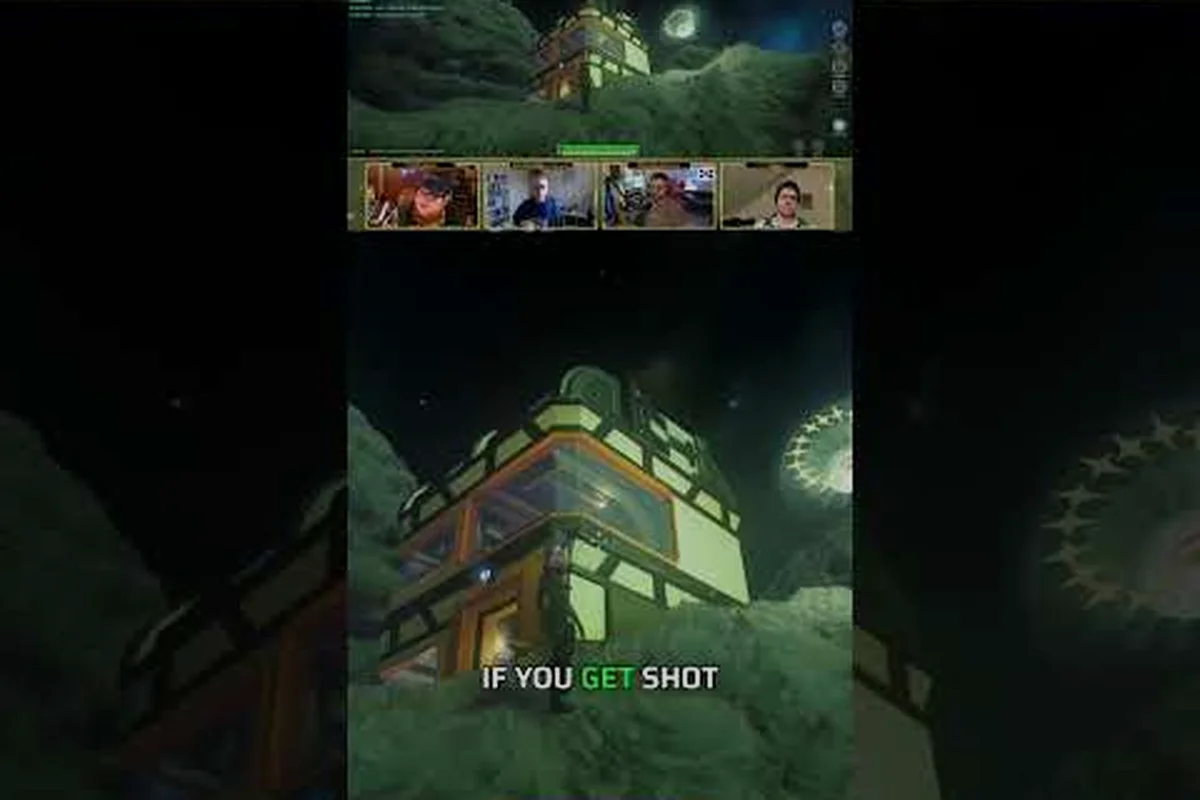
Choosing the right Stars Reach exploration professions shapes how you experience the living galaxy, because every planet you scout feeds the shared economy and your personal progression. The game's core loop rewards players who venture beyond the safe zones, discover new worlds, and map uncharted sectors before the wormholes shift. Whether you want to chart trade routes, catalog rare biomes, or become the go-to guide for your guild, understanding the profession system is the difference between drifting aimlessly and building a reputation across the stars. This Stars Reach exploration professions guide breaks down each path, explains how to combine them effectively, and shows you why scouts are the backbone of every thriving settlement. But before you chart a course for the unknown, you need to know where it’s safe to set down your rover, so pair your scouting routes with our breakdown of Stars Reach Safe Planets to ensure your exploration data leads to secure, thriving outposts rather than a fiery crash landing.
The Core Exploration Professions in Stars Reach
The profession system in Stars Reach is designed around flexibility, letting you mix and match skill trees to create a playstyle that fits your goals. According to the official Stars Reach website, players can explore diverse professions with detailed skill trees that influence the galactic economy, and combining or changing professions keeps the experience fresh. For explorers, this means you are never locked into a single role, but understanding the strengths of each path helps you plan your progression efficiently.
The exploration category includes four primary professions—Scout, Surveyor, Prospector, and Cartographer—that work well together, each with its own focus and reward structure. Scouts specialize in rapid long-range reconnaissance to flag promising sectors, while Surveyors methodically catalog surface anomalies for research points. Prospectors analyze mineral compositions to determine extractable yields, and Cartographers transform raw positional data into sellable star charts. Here is how they compare:
| Profession | Core Focus | Key Skills | Best For |
|---|---|---|---|
| Scout | Long-range survey and threat assessment | Sensor calibration, stealth approach, signal triangulation | Players who want to be first on new planets |
| Cartographer | Mapping and data selling | Charting algorithms, terrain analysis, map publishing | Players who enjoy passive income and supporting guilds |
| Xeno-Biologist | Flora and fauna cataloging | Specimen collection, habitat analysis, rare species tracking | Players who want to understand planet ecosystems |
| Prospector | Resource location and extraction | Mineral scanning, survey drones, extraction efficiency | Players who want to feed crafting professions |
Each profession has a detailed skill tree with multiple branches, so you can specialize within a role or spread points across several. The game rewards experimentation because the living galaxy constantly changes, meaning a strategy that worked last week might need adjustment when new sectors open up. Community reports suggest that players who invest in at least two complementary exploration professions see significantly higher returns than those who focus on a single tree, since the skills often synergize in unexpected ways.
Scout Guide: Being First on New Worlds
The Scout profession is the most exciting entry point for players who love discovery, because it puts you on the front line of every new sector that opens. Scouts are responsible for entering uncharted space, assessing threats, and relaying critical information back to their settlements before the main population arrives. This role requires a mix of stealth, speed, and situational awareness, since you never know what you might find on an unexplored planet.
Key scout skills include sensor calibration, which extends your detection range and helps you spot valuable anomalies from a distance, and signal triangulation, which lets you pinpoint the exact location of points of interest without wasting fuel. The stealth approach skill is arguably the most valuable early investment, because it reduces the aggro range of hostile creatures and lets you gather data without triggering combat encounters. According to player experience shared on community forums, a well-specced scout can map an entire small planet in under an hour, while a poorly equipped one might spend twice that time fighting off native wildlife.
Scouts also benefit from the living galaxy mechanic, where new space sectors and planets are discovered as the game runs, and old wormholes might collapse, leaving older sectors unreachable. This means timing is everything, and scouts who log in during major discovery events can secure prime real estate for their guilds. The Steam store page highlights that players work together to transform untamed worlds into thriving civilizations, and scouts are the ones who identify which worlds are worth the effort.
Map Your World: Cartography and Data Economy
The Cartographer profession turns exploration data into a valuable commodity, because every map you publish becomes a resource that other players can purchase. When you survey a planet, you generate raw data that can be processed into navigational charts, resource overlays, and threat maps. These products feed directly into the galactic economy, making cartography one of the most sustainable income sources in the exploration category.
The cartography skill tree focuses on charting algorithms, which improve the accuracy and detail of your maps, and terrain analysis, which helps you identify structural features that might indicate valuable deposits or hidden caves. The map publishing skill is what actually generates income, since it determines how many copies of your map you can sell and at what quality tier. Higher-quality maps command premium prices because they include more detailed information, such as exact resource node locations and creature spawn patterns.
| Map Tier | Data Required | Sell Price Range | Buyer Demand |
|---|---|---|---|
| Basic Chart | Surface survey only | 50-150 credits | Low |
| Standard Map | Surface + terrain analysis | 200-500 credits | Medium |
| Detailed Map | Full survey + resource overlay | 600-1,200 credits | High |
| Master Chart | Complete data + threat assessment | 1,500-3,000 credits | Very High |
The demand for maps is driven by other professions, since miners, builders, and combat players all need accurate information before they commit to a location. A good cartographer can build a reputation for reliability, and guilds will actively seek out their services before expanding into new sectors. The key to success is combining cartography with at least one other exploration profession, because you need to gather the raw data yourself rather than relying on purchased information that might be outdated.
Exploration Tips for Efficient Surveying
Efficient surveying requires more than just flying to a planet and scanning, because the living galaxy mechanics mean conditions change constantly. One of the most important Stars Reach exploration tips is to always carry a survey drone loadout, since these devices can cover ground much faster than on-foot scanning and they reduce the risk of triggering hostile encounters. Drones are especially valuable on planets with aggressive native life, where dismounting to scan manually can quickly become a death sentence.
Another critical tip is to prioritize high-altitude scanning before landing, because this gives you a broad overview of the terrain and helps you identify the most interesting landing zones. The initial scan data might not be detailed enough for a master chart, but it tells you where to focus your ground-level efforts. Experienced scouts recommend landing at the highest point in the region and working outward in a spiral pattern, since this minimizes backtracking and ensures complete coverage.
The signal triangulation skill becomes even more valuable when you combine it with cartography, because it lets you mark points of interest that your drones can then survey automatically. This creates a workflow where you identify targets from the air, deploy drones to collect detailed data, and then compile the results into a sellable map. Community data suggests that players who follow this pattern can produce a standard-quality map in about 20 minutes, while a detailed map takes roughly 45 minutes of focused effort.
New Worlds and Planet Diversity
The living galaxy in Stars Reach features hundreds or thousands of smaller planets and space sectors rather than a few really large ones, according to the official tour of Stars Reach. This design choice means every planet feels distinct, and the variety keeps exploration fresh because you never know what type of world you will encounter next. The game includes multiple planet categories, each with its own environmental challenges and resource profiles.
Understanding planet types is the first step toward mastering stars reach exploration professions, because each category—from scorching lava worlds to frozen tundras—demands a distinct loadout and skill set that directly impacts your survival and mission success. For example, a scout guide will tell you that gas giants require specialized atmospheric filters and radiation shielding, while rocky planets with thin atmospheres demand reinforced hull plating and thermal management systems to handle extreme temperature swings. Before you map your world and set out, reviewing these categories ensures you pack the right gear, avoiding costly mid-expedition failures that can strand you far from a resupply point. Here is a breakdown of the main planet types you will encounter:
| Planet Type | Environmental Conditions | Common Resources | Exploration Challenge |
|---|---|---|---|
| Temperate | Mild climate, breathable atmosphere | Water, wood, basic minerals | Low |
| Arid | Extreme heat, low water | Rare metals, crystals | Medium |
| Frozen | Sub-zero temperatures, ice fields | Frozen gases, exotic minerals | Medium |
| Toxic | Corrosive atmosphere, hazardous flora | Chemical compounds, rare elements | High |
| Volcanic | Extreme heat, unstable terrain | Volcanic glass, geothermal energy | High |
Each planet type requires specific survival gear, and scouts who specialize in a particular environment can develop efficient loadouts that reduce resource consumption. The Xeno-Biologist profession becomes particularly valuable on toxic and volcanic worlds, since these environments host the rarest species and the most valuable biological samples. Players who want to catalog the full range of life in the galaxy should invest in environmental resistance skills alongside their scanning abilities.
Planets Worth Prioritizing for New Explorers
New players should focus on temperate and arid planets first, because these environments have the lowest risk and still provide valuable data for cartography. Temperate worlds are ideal for learning the surveying workflow, since you can explore without worrying about environmental damage or aggressive wildlife. Arid planets introduce the first real challenge, but the rare metal deposits make them worth the extra preparation.
The frozen planets are a good second step for intermediate explorers, because they require thermal gear but offer some of the most valuable resources in the early game. Frozen gases are essential for crafting advanced fuel, which means demand for these resources is consistently high. Players who establish a reputation for mapping frozen worlds can build a steady income stream by selling both the maps and the resource location data.
Volcanic and toxic planets should be approached with caution, since they demand significant investment in survival gear and environmental resistance skills. However, the rewards are correspondingly high, and these worlds often contain resources that are unavailable anywhere else. According to community reports, the first players to map a volcanic planet can command premium prices for their charts, because the data is in high demand for guilds planning major expeditions.
Combining Exploration Professions for Maximum Value
The real power of the Stars Reach exploration professions system comes from combining skill trees, because each profession covers a different aspect of the exploration loop. The most common and effective combination is Scout + Cartographer, since this lets you gather data efficiently and then turn it into sellable products. This pairing creates a self-sustaining loop where you explore new planets, map them, sell the charts, and use the income to fund better gear for more ambitious expeditions.
Another strong combination is Prospector + Cartographer, which focuses on resource location rather than pure discovery. Prospectors use their scanning skills to identify valuable mineral deposits, and when combined with cartography, they can produce maps that show exact resource node locations. These maps are extremely valuable to mining guilds, and players who master this combination often become the primary suppliers for large-scale industrial operations.
The Xeno-Biologist + Scout combination appeals to players who want to catalog the galaxy's life forms while still being first to new worlds. This pairing lets you collect biological samples during your scouting runs, and the data you gather feeds both the scientific community and the crafting economy. Rare species samples can be sold to researchers or used to unlock unique crafting recipes, making this combination both intellectually satisfying and financially rewarding.
Exploration Professions Comparison Table
To help you decide which combination fits your playstyle, here is a comparison of the most popular exploration profession pairings, focusing on how each duo handles the distinct hazards of Stars Reach's procedurally generated worlds. For example, pairing Surveyor with Xeno-Botanist maximizes resource yield on lush, life-bearing planets but leaves you vulnerable to aggressive fauna, whereas Geologist with Cartographer excels at navigating and mining hazardous volcanic or zero-atmosphere moons. The table below breaks down their synergy, survival utility, and the specific tools each pairing relies on, so you can weigh the trade-offs between pure profit and expedition safety before you ever leave the spaceport.
| Profession Combo | Income Potential | Risk Level | Time Investment | Best Playstyle |
|---|---|---|---|---|
| Scout + Cartographer | High | Medium | Medium | Solo explorers who enjoy discovery |
| Prospector + Cartographer | Very High | Medium | High | Players focused on economic gain |
| Xeno-Biologist + Scout | Medium | High | Medium | Completionists and researchers |
| Scout + Prospector | Medium | High | Medium | Action-oriented explorers |
| Cartographer + Xeno-Biologist | Medium | Low | High | Methodical players who prefer safety |
Each combination has its own strengths, and the best choice depends on your goals and how much risk you are willing to accept. Players who want to maximize income should focus on Prospector + Cartographer, while those who value discovery over profit will find Scout + Cartographer more satisfying. The game's profession system allows you to change your loadout over time, so you can experiment with different combinations as you progress.
Reading Planet Signals Like a Specialist
The living galaxy mechanic creates opportunities for advanced explorers who understand how to read the game's signals. New space sectors and planets are discovered as the game runs, and old wormholes might collapse, leaving older sectors unreachable. This means the map is constantly changing, and players who can predict where new sectors will appear gain a significant advantage.
One advanced strategy is to monitor wormhole activity in established sectors, since the appearance of new wormholes often signals an imminent discovery event. Scouts who position themselves near active wormholes can be among the first to enter new sectors when they open, giving them a head start on mapping and resource collection. Community data suggests that these discovery events happen on a semi-regular basis, and players who are prepared can secure the most valuable claims.
Another strategy involves building a reputation network with other explorers, since sharing information about new discoveries benefits everyone. A well-connected scout can trade tips with other players, learning about promising sectors before they become widely known. This information network becomes increasingly valuable as the galaxy expands, because no single player can explore everything alone.
Exploration Tips for Guild Operations
Guilds that invest in exploration professions gain a significant advantage in the competition for territory and resources. A dedicated scouting team can map potential settlement locations before other guilds even know they exist, allowing the guild to claim the best planets. The map your world philosophy extends beyond individual profit, since accurate maps benefit the entire guild by reducing wasted time and resources.
For guild operations, the most valuable combination is Scout + Cartographer + Prospector, since this covers the full exploration loop from discovery to resource assessment. A team of three players, each specializing in one of these professions, can efficiently survey a new planet and produce a complete resource assessment within a few hours. This information allows the guild leadership to make informed decisions about settlement placement and resource extraction.
Guilds should also maintain a cartography archive, since historical maps become valuable when the galaxy shifts. When old wormholes collapse and sectors become unreachable, the maps of those sectors become historical records that can be sold to researchers or used to track how the galaxy has evolved. Players who maintain comprehensive archives can become the definitive source of information about the game's changing geography.
Frequently Asked Questions
What are the best Stars Reach exploration professions for beginners?
The Scout profession is the best starting point because it teaches you the core exploration mechanics while keeping risk relatively low. Combine it with Cartographer as your second profession to start generating income from your exploration data. This pairing lets you learn the game's systems while building a sustainable credit flow.
How do I unlock new exploration skills?
Skills unlock as you gain experience in each profession tree. You earn experience by performing profession-related actions, such as scanning planets, collecting samples, or publishing maps. Higher-tier skills require both experience and specific prerequisites, so plan your skill point allocation carefully to avoid wasting progress on dead-end branches.
Can I change my exploration professions later?
Yes, the profession system is flexible, and you can change your active professions at any time. However, your skill points remain invested in the original trees, so switching professions means starting new trees from scratch. The game encourages experimentation, but players who want to reach the highest tiers should focus on a limited number of professions.
How does the living galaxy affect exploration?
The living galaxy means the map is always changing, with new sectors appearing and old ones becoming unreachable when wormholes collapse. This creates a sense of urgency for explorers, since valuable discoveries might become inaccessible if you wait too long. It also means the information you gather has a shelf life, so publish maps promptly.
What is the most profitable exploration profession combination?
The Prospector + Cartographer combination generates the highest income because it produces maps with exact resource locations, which are in constant demand from mining and crafting guilds. The key is building a reputation for accuracy, since players will pay premium prices for maps they can trust. This combination requires more time investment but offers the best long-term returns.